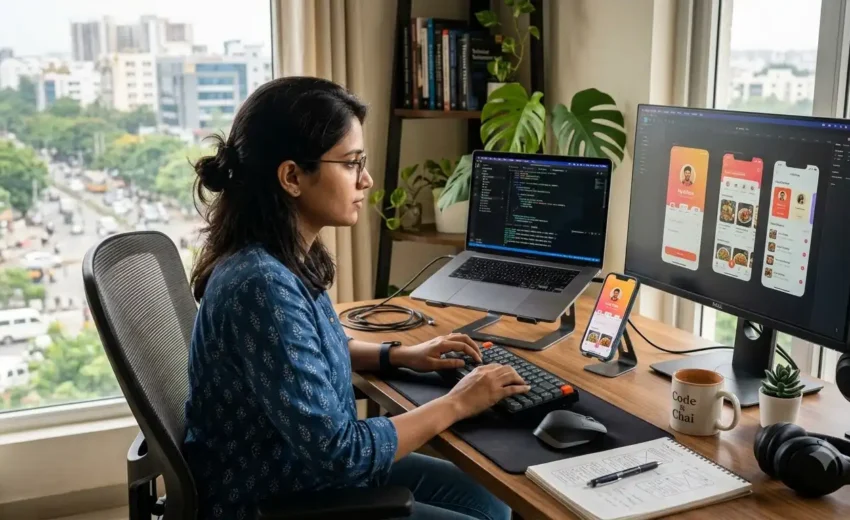
Freelance App Developer in Hyderabad: Tech Stack Choices & App-Specific Mistakes to Avoid
App projects fail differently than website projects do. A website with a small bug is usually a quick fix. An app with the wrong architecture decision made in week one can mean months of rework, an app store rejection, or a product that works fine in testing and breaks the moment real users load it with real data.
If you’re bringing on a freelance app developer in Hyderabad, the decisions that matter most happen before development even starts — which platform to build for, which framework to use, and how much to include in a first version. I’ve built mobile apps across booking platforms, locator tools, and quick-commerce products, and this guide covers the choices that determine whether an app project goes smoothly or turns into a six-month headache.
Native vs Cross-Platform: The First Decision That Shapes Everything
This is usually the first real conversation a freelance app developer in Hyderabad should have with you, and it affects cost, timeline, and long-term maintenance.
Native development — building separately for iOS and Android using platform-specific tools — gives the best performance and deepest access to device features. It also means maintaining two separate codebases, which roughly doubles both cost and ongoing maintenance work.
Cross-platform development using Flutter or React Native lets a single codebase run on both platforms, which is why most startups and small businesses choose it. Performance is close enough to native for the vast majority of use cases, and development moves noticeably faster.
Unless your app depends heavily on device-specific hardware features or needs the absolute best possible performance for something like real-time graphics, cross-platform is usually the more sensible starting point.
What Actually Belongs in an MVP
The single most expensive mistake in app development is building too much before validating that anyone wants the product. A freelance app developer in Hyderabad should push back, respectfully, when a first version includes features that could easily wait.
A well-scoped MVP typically includes:
The one or two core actions users actually came to the app to do
Basic account creation and login
A simple, functional interface — not a fully polished design system
Just enough backend to support real usage, without building for scale you don’t have yet
Everything else — social features, advanced analytics, admin dashboards, multi-language support — belongs in a second phase, built once the core idea is proven with real users.
Backend Decisions That Get Overlooked Until It's Too Late
App development conversations tend to focus on screens and features, but backend architecture decisions made early are much harder to change later. Ask your freelance app developer in Hyderabad specifically about:
How user data will be stored and secured
Whether the app needs to work offline, and how data syncs once connectivity returns
How the backend will handle growth if the app gets more usage than expected
What third-party services — payments, maps, notifications — need to be integrated, since each one adds its own setup and testing requirements
The App Store Submission Process Most Clients Don't Expect
Launching an app isn’t just handing over a finished build — both Apple’s App Store and Google Play have review processes that can add unexpected delays if you’re not prepared for them.
Apple’s review process is generally stricter and can take several days, sometimes longer if the app gets flagged for guideline issues around privacy, in-app purchases, or design consistency. Google Play’s review is typically faster but still requires proper handling of permissions, data safety disclosures, and content policies.
A freelance app developer in Hyderabad experienced with actual launches — not just development — should budget time for this review cycle and know how to handle a rejection without it derailing your entire timeline.
Key Benefits of Getting the Technical Foundation Right
Lower long-term cost, since cross-platform choices and a disciplined MVP scope avoid unnecessary rebuild work
Faster time to market, by focusing the first version on what actually needs validating
Fewer app store delays, when submission requirements are planned for from the start
Easier scaling later, when backend decisions are made with growth in mind, not just the demo
A cleaner handoff, whether you continue with full stack development support or bring on someone else later
Common Mistakes Clients Make When Hiring a Freelance App Developer
Choosing native development by default, without weighing whether cross-platform would meet the actual need at a fraction of the cost and timeline.
Overloading the MVP with features that sound important but haven’t been validated by real user demand yet.
Not asking about app store experience specifically. Building an app and successfully launching one through App Store and Play Store review are different skill sets — confirm both.
Ignoring offline and data-sync requirements until testing, when they should be part of the initial architecture conversation.
Skipping a discussion about post-launch updates. App store guidelines and OS versions change regularly — ask how ongoing maintenance will be handled before the app ships.
Expert Tips for Working With a Freelance App Developer
Ask which framework they’d recommend for your specific use case, and why, rather than assuming the answer
Request a staging build on your own device partway through development, not just screenshots
Clarify who handles app store account setup and submission — this is often assumed rather than confirmed
Keep the MVP feature list in writing, and treat every addition mid-project as a scope change to discuss, not a given
Ask directly how they’ve handled an app store rejection in the past — the answer tells you a lot about real launch experience
Frequently Asked Questions
1. Should I choose native or cross-platform app development?
For most startups and small businesses, cross-platform frameworks like Flutter or React Native offer the best balance of cost, speed, and performance. Native makes sense mainly for apps with heavy device-specific requirements.
2. How much does it cost to hire a freelance app developer in Hyderabad?
It depends on platform choice and scope, but small MVP apps often start around ₹50,000-₹80,000, with more complex builds costing significantly more based on backend needs and integrations.
3. How long does app store approval usually take?
Apple’s review typically takes a few days but can extend longer if issues are flagged. Google Play review is usually faster, often within a day or two.
4. What should be included in a first app version?
Yes. We handle store listing setup, compliance checks, and manage the submission process, including resolving any rejections from Google.
5. Can a freelance app developer handle both design and development?
Some can, but confirm this specifically — many freelance app developers focus on development and expect design assets to be provided or sourced separately.
6. Do I need a different developer for iOS and Android?
Not necessarily. A freelance app developer in Hyderabad experienced in cross-platform frameworks can typically handle both from a single codebase.
7. What happens if my app gets rejected by the App Store?
A rejection usually comes with specific feedback that needs to be addressed and resubmitted — an experienced developer will know how to interpret and resolve common rejection reasons quickly.
Conclusion
The biggest cost and timeline risks in app development show up early — in the native versus cross-platform decision, in how disciplined the MVP scope stays, and in whether app store requirements are planned for from day one. A freelance app developer in Hyderabad who raises these questions before you’ve committed budget is doing you a real favor.